Luke Johnson
11/17/2015
WRD 110 Section 54
Jennifer Hudgens
Academic and Real World Success of Fraternity
Member's
 To
start off my documentary with a bang I will begin with a sarcastic/satirical
clip of a few friends and myself dramatically studying in the Sigma Nu
fraternity house with the background music being "O Fortuna" by Carl
Orff. At the end of this scene I will zoom in on a physics textbook and then
transition to a text screen that will display, "When many people think
about fraternities, they don't think about academics, but they should."
The camera will then switch from the text screen to another video clip of my
fraternity brothers and I studying, I will then voice-over and say:
"Contrary to popular belief, all of Greek life highly values academics.
From mandatory study hours to holding their members to full academic
accountability, every Fraternity and Sorority has standards that they expect
each of their member's to strive for, adhere to, and uphold. It is my belief
that Non-Greek student's should understand and respect the success that
fraternity members esteem to during and after college." This clip will
then fade out and be replaced by a video of an interview I conducted with Sigma
Nu's scholarship chair, Taylor.
To
start off my documentary with a bang I will begin with a sarcastic/satirical
clip of a few friends and myself dramatically studying in the Sigma Nu
fraternity house with the background music being "O Fortuna" by Carl
Orff. At the end of this scene I will zoom in on a physics textbook and then
transition to a text screen that will display, "When many people think
about fraternities, they don't think about academics, but they should."
The camera will then switch from the text screen to another video clip of my
fraternity brothers and I studying, I will then voice-over and say:
"Contrary to popular belief, all of Greek life highly values academics.
From mandatory study hours to holding their members to full academic
accountability, every Fraternity and Sorority has standards that they expect
each of their member's to strive for, adhere to, and uphold. It is my belief
that Non-Greek student's should understand and respect the success that
fraternity members esteem to during and after college." This clip will
then fade out and be replaced by a video of an interview I conducted with Sigma
Nu's scholarship chair, Taylor.
The script of the interview will be so:
Luke: What is your job
as scholarship chair?
Taylor: My job is to
basically make sure that everyone in the fraternity is motivated to do well in
their classes and to help organize study groups for people who are struggling
in certain classes.
Luke: What do you
believe is the importance of your job?
Taylor: I believe that
my job is very important because Nationals (the organization who oversees
everything the chapter does) takes grades very seriously. Also, it's important
to me that my brother's are being successful in their classes because we are
paying money to go to school here so keeping them focused on that makes me feel
very important.
Luke: What are your
academic expectations for every member of the fraternity?
Taylor: Well first of
all, I expect our collective overall GPA to be close to a 3.2. This GPA would
put us in the top 3 overall GPA's on campus which would be great. Individually
I don't expect everyone to make a 3.2 but I do expect everyone to be above, or
really close to a 3.0. This is very accomplishable as long as people take
advantage of the study groups that I put together for them.
Luke: Why do you think
non-fraternity members look at fraternity member academics so lowly?
Taylor: I think they
believe that we get bad grades because they've never actually seen how a Greek
Organization is run. The people who think we are all stupid have just been
watching too many movies. All they have heard about is the parties and hazing,
they would know differently if they actually learned more about us.
Taylor is clearly
passionate about his job as scholarship chair and his passion for the job helps
reflect well on fraternity academics. Every Greek Organization on campus has
their own version of a scholarship chair, or an academic chair. Every single
one of them do a very similar job. Some implement mandatory study hours that
members must complete each week, some organize study groups, some just make
sure that every member who is struggling gets individual help. Regardless, each
and every one of them has the important job of motivating each and every member
to be successful in the classroom.
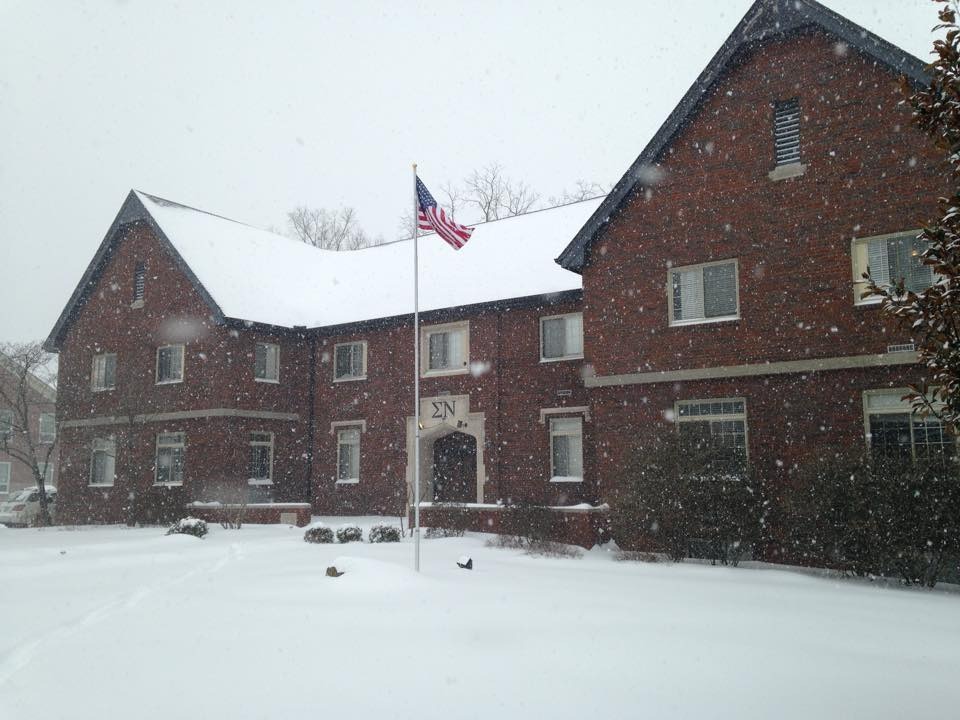 Next, I questioned Taylor about how he motivates all of
the members of the fraternity to do well. He replied, "There are a few
ways that we keep all of our members motivated, the first way is how we call
out all of our exam grades in meeting, this way everyone knows that if they
fail a test or do poorly on a test, they will have to announce their grade out
loud in front of the entire fraternity. Of course after a little booing, we
will get that person help but it still motivates them to do well. The next
thing we do to motivate those doing poorly is the option to put them on social
probation. If someone in the fraternity has below a 2.5 GPA then they are placed
on social probation. This means that they will not be allowed to attend any of
our parties, tailgates, or even philanthropy events until their GPA returns
above a 2.5. This usually isn't a problem for anyone but it can still be used
for extreme measures. Finally, a more positive type of reinforcement comes from doing well in your classes.
On mid-terms and on final semester grades we do a drawing for a $100 gift card.
For every 'A' that you get on your mid-term or final you get your name put into
the drawing one time. This small reward helps push those people on the edge
between that 'B' and 'A' and gives them a push to work a little bit harder to
get that 'A.'" Taylor also pointed out that these strategies are effective
for most members of the fraternity but there are some people that it just
doesn't work for. So he's been working on trying to find different motivational
techniques to better suit the individuals who still struggle under the current
system. Although both Taylor and I were unsure about motivational techniques
used by other Greek Organizations, we both agreed that every one of them had to
have some way of pushing their members to do well.
Next, I questioned Taylor about how he motivates all of
the members of the fraternity to do well. He replied, "There are a few
ways that we keep all of our members motivated, the first way is how we call
out all of our exam grades in meeting, this way everyone knows that if they
fail a test or do poorly on a test, they will have to announce their grade out
loud in front of the entire fraternity. Of course after a little booing, we
will get that person help but it still motivates them to do well. The next
thing we do to motivate those doing poorly is the option to put them on social
probation. If someone in the fraternity has below a 2.5 GPA then they are placed
on social probation. This means that they will not be allowed to attend any of
our parties, tailgates, or even philanthropy events until their GPA returns
above a 2.5. This usually isn't a problem for anyone but it can still be used
for extreme measures. Finally, a more positive type of reinforcement comes from doing well in your classes.
On mid-terms and on final semester grades we do a drawing for a $100 gift card.
For every 'A' that you get on your mid-term or final you get your name put into
the drawing one time. This small reward helps push those people on the edge
between that 'B' and 'A' and gives them a push to work a little bit harder to
get that 'A.'" Taylor also pointed out that these strategies are effective
for most members of the fraternity but there are some people that it just
doesn't work for. So he's been working on trying to find different motivational
techniques to better suit the individuals who still struggle under the current
system. Although both Taylor and I were unsure about motivational techniques
used by other Greek Organizations, we both agreed that every one of them had to
have some way of pushing their members to do well.
Now that the interview with Taylor is over I will fade
out into a scene of me walking by Whitehall surrounded by a bunch of students when
a voice-over of my voice will say: "According to multiple studies, it has
been shown that students who are independents have better grades than those who
are involved in fraternities. Although this has been proven by multiple studies,
the difference between these GPA's isn't very significant. In fact, one of the
studies executed by Purdue University showed that members of fraternities had
slightly higher GPA's (~.12) while the other studies I read didn't provide
actual data which leads me to believe the difference between them isn't very
significant. It also gives reasonable cause to consider whether or not this
correlation could be different for different universities or even fraternities around
the country." I personally believe that the correlation between grades
within fraternities compared to independents completely depends on how the
specific fraternity is ran. If a fraternity pushes for a strong focus on
academics instead of only focusing on the social aspect, then that fraternities
GPA will be higher than the average independent students' GPA. Next, I also
believe that it could also be dependent on the type of student environment
people learn best in. Some students learn best in group environments with group
study sessions. While other students learn best when they are studying on their
own and are very self-motivated and introverted. Multiple studies have also
shown that introverts tend to be the most successful students. These types of
students usually would steer away from Greek Organizations which adds a
variable to the curve. Although by being introverted they miss out on the
social and life aspect of success which is connections.
 The next scene will open out with a
video of a party. The background music being "It's a party" by Waka
Flocka. The scene will play out for a few seconds and then my voice will come
out over top the music and say, "Fraternities help teach many other skills
necessary to become a successful student and the job world. One of these is stress
management. In order to be successful in life in general you have to be able to
decompress, fraternities provide an easy outlet for these students by having
parties and hanging out with your really close friends or fraternity brothers.
The next, more important aspect that fraternities bring to the table is
connections. Everybody has heard about someone being successful only because
they knew the right people. When you join a fraternity you get to know people
who are up to 4 years older than you and also are in your respective major.
These people will be moving out into the job world and will be important
connections to help you acquire a job when you graduate. On top of this you
will meet other alumni who are much older and more experienced. These people
may already be the CEO of their own company which would be a very important
connection in the job market whether it comes to references or to them giving
you a job. This high level of business connections is almost exclusive to
fraternities and is very hard to find in any other community." The fact
that fraternities always bring you connections to the real world is an
astounding and extremely valuable asset. In my opinion, this is the most
valuable perk of being a part of a fraternity and I feel like everyone should
recognize and accept how much it truly leads to success.
The next scene will open out with a
video of a party. The background music being "It's a party" by Waka
Flocka. The scene will play out for a few seconds and then my voice will come
out over top the music and say, "Fraternities help teach many other skills
necessary to become a successful student and the job world. One of these is stress
management. In order to be successful in life in general you have to be able to
decompress, fraternities provide an easy outlet for these students by having
parties and hanging out with your really close friends or fraternity brothers.
The next, more important aspect that fraternities bring to the table is
connections. Everybody has heard about someone being successful only because
they knew the right people. When you join a fraternity you get to know people
who are up to 4 years older than you and also are in your respective major.
These people will be moving out into the job world and will be important
connections to help you acquire a job when you graduate. On top of this you
will meet other alumni who are much older and more experienced. These people
may already be the CEO of their own company which would be a very important
connection in the job market whether it comes to references or to them giving
you a job. This high level of business connections is almost exclusive to
fraternities and is very hard to find in any other community." The fact
that fraternities always bring you connections to the real world is an
astounding and extremely valuable asset. In my opinion, this is the most
valuable perk of being a part of a fraternity and I feel like everyone should
recognize and accept how much it truly leads to success.  The next point I will touch on is the way that
fraternities are run. I will do this by fading out the music of "It's a
party" to a much more relaxed song that is to be determined with an
uplifting beat. My voice will once again come over the music and the visuals
will be me walking through the fraternity house. I will say, "Another way
that fraternities help prepare you for success in the world is the way they are
ran. A fraternity is ran very similarly to a business, fraternities have; a
president, vice president, and other leading officers to make sure the
fraternity is ran smoothly. They also have a large amount of committees headed
by one person, these committees perform different jobs within the fraternity.
For example, one committee handles the planning of all parties and tailgates,
one plans all fraternity philanthropy events, another handles and manages the
budget, and another helps the design of new t-shirts. There are many more than
these and they are all run in a very similar fashion to the way that many
businesses are ran. This knowledge and experience will pay off for all members
because they will understand their position within the business from the get-go
and will be able to effectively transition into higher positions as they
advance. This can go a long way in job-security and even job acquisition."
In my opinion this is important information to include in the documentary
because if you already have practical experience in a situation that is nearly
identical to business situations then you can easily transition out of college
into the business world without a crack. While most people struggle with that
transition those people who were involved in Greek Organizations will already
have a leg-up against the people who were independents.
The next point I will touch on is the way that
fraternities are run. I will do this by fading out the music of "It's a
party" to a much more relaxed song that is to be determined with an
uplifting beat. My voice will once again come over the music and the visuals
will be me walking through the fraternity house. I will say, "Another way
that fraternities help prepare you for success in the world is the way they are
ran. A fraternity is ran very similarly to a business, fraternities have; a
president, vice president, and other leading officers to make sure the
fraternity is ran smoothly. They also have a large amount of committees headed
by one person, these committees perform different jobs within the fraternity.
For example, one committee handles the planning of all parties and tailgates,
one plans all fraternity philanthropy events, another handles and manages the
budget, and another helps the design of new t-shirts. There are many more than
these and they are all run in a very similar fashion to the way that many
businesses are ran. This knowledge and experience will pay off for all members
because they will understand their position within the business from the get-go
and will be able to effectively transition into higher positions as they
advance. This can go a long way in job-security and even job acquisition."
In my opinion this is important information to include in the documentary
because if you already have practical experience in a situation that is nearly
identical to business situations then you can easily transition out of college
into the business world without a crack. While most people struggle with that
transition those people who were involved in Greek Organizations will already
have a leg-up against the people who were independents.
I will then transition into an interview that I will
conduct with someone who is not a part of a fraternity. The interviewee will
answer questions such as: Why didn't you join a fraternity? What do you believe
is the most important aspect that fraternity recruiters look for in potential
new members? What do you think are the benefits of fraternities? Ending with
the question, Do you think fraternities are more beneficial or hurtful to a
student's success in school and their career and why? I expect these questions
to draw out some of the stereotypical views of fraternities and would create a
response to this and put it into my documentary.
The main reason that fraternities are not seen as academically
focused organizations is because of the way media portrays them. All people
hear about when it comes to fraternities
are bad hazing stories, people jumping off balconies or performing other
actions that only reflect a very small percentage of Greek Organization
members. Following this interview I will change the song into an instrumental
version of the song "Love" by Kid Cudi. The song sends out a message
of hopefulness and has an unique, uplifting beat. My voice will speak over the
instrumental of the song and will say, "Fraternities acquired this image
of being non-academically focused organizations because of the media's
portrayal of them. Within the media all you see about fraternities are stories
about people doing stupid things at parties and on spring break like jumping
off balconies and dying. These rare stories overshadow everything that
fraternities accomplish collectively and how beneficial they are to their
members. It is my hope that the media stops portraying fraternities in a bad
light and letting them create their own individual stereotypes and
perceptions." This is important because this leads into the solution for
the problem of fraternities being stereotyped as non-academically focused
organizations.
In the conclusion I will play another uplifting song that
has yet to be determined and will re-highlight the pro's of fraternities by
saying, "Fraternities bring a lot of perks to their members to help them
succeed both in school and the job world. From academic support to holding
everyone accountable for their grades, to providing strong networking
connections for their members while helping them understand the way a business
is run. Most of these aspects of fraternities are ignored by the media and
students who are not a part of a Greek Organization. If the media stops blowing
up the isolated incidents when something bad happens to a fraternity member
then fraternities will be seen for what they truly are. Each one will be able
to create their own story about how they run things and how successful their
members become. Some would be better than others but it would at least let them
create their own image instead of the media creating a single story for all
fraternities." The song will then slowly fade out as I run through photos
of different successful people who were a part of fraternities.
Words: 2324
Works Cited
Cook, Ryan M. Sigma
Nu - Gamma Iota. 2012. Chapter House, Lexington, KY. Sigma Nu -
Gamma Iota. Web. 17 Nov. 2015.
<http://www.uksigmanu.com/chapter-house>.
Green, Kelly, "Fraternity Involvement and Academic
Success: The Role of Cultural, Human and Social Capital" (2013). Honors
Theses. Paper 173. http://diginole.lib.fsu.edu/uhm/173
Hawkins, Amy L., "Relationship between Undergraduate
Student Activity and Academic Performance" (2010). College of Technology
Directed Projects. Paper 13. http://docs.lib.purdue.edu/techdirproj/13
Johnson, L. (2015). Photo of physics textbook. Photo.
Naeem, Mehroz M. Business
Partner. 2015. Codecanyon.net, Code Canyon. Code Canyon. Web.
17 Nov. 2015.
<http://codecanyon.net/collections/4421367-business-partner>
Wire, Allison. The Spring Semester Bucket List | The Odyssey. 2014. The Odyssey, Ole Miss. The Spring Semester Bucket List. Web. 17 Nov. 2015. <http://theodysseyonline.com/ole-miss/spring-semester-bucket-list-2/84195>.
.

No comments:
Post a Comment